

2025年8月27日 | 社員インタビュー
From 5 Countries to Diverta : Life as an Intern in Tokyo

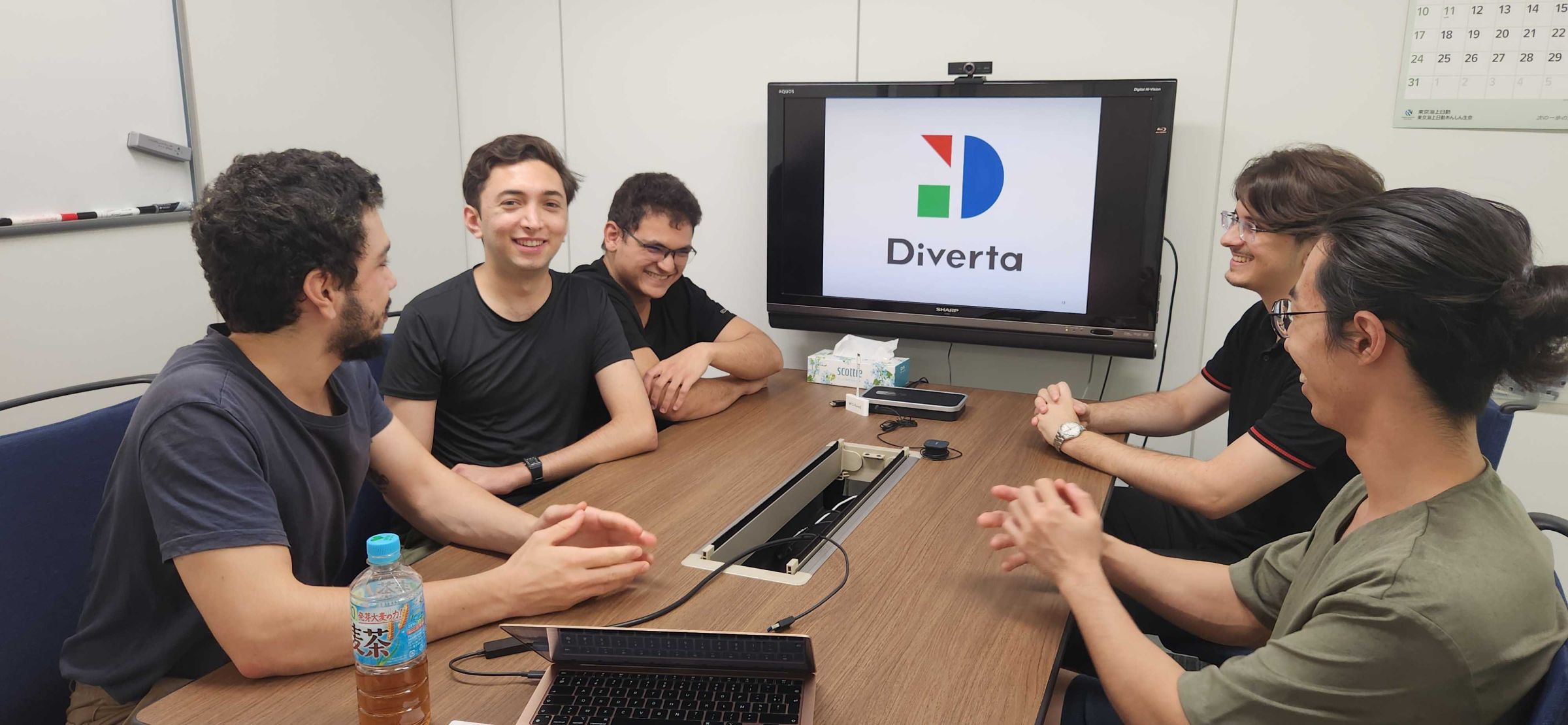
In this candid interview, we sit down with five international students who joined our global web development internship in 2025. Coming from diverse backgrounds across three continents, these talented individuals share their authentic experiences working at Diverta’s Tokyo office. As their internships come to an end (with one still ongoing), they reflect on their journey and share advice to guide future interns.
In this interview, our interns discuss everything from the application process to daily life in Tokyo. They share insights about:
- How they discovered and applied for the web development internship in Japan
- The technical skills and tools they mastered during the program
- Navigating cultural differences in a Japanese work environment
- Tackling challenging full-stack development projects
- Practical advice for candidates going through the application and interview process
Whether you're considering applying for an internship with us or simply curious about what it's like to work in Japan's tech industry, this interview offers an unfiltered look at the intern experience from those who lived it.
Asmaa: Let's start with introductions. Could each of you please introduce yourself and your background. I'd love to also hear how you discovered the Diverta Global Internship program and what motivated you to apply.
Houcem: This looks like a podcast setting (laughs). My name is Houcem, and I'm from Tunisia. I found this internship on the official Erasmus Intern website and applied after researching the company. The experience has truly been a pleasure and an honor.
I studied business with a major in information technology, which I know wasn't a perfect match for the role. From my experience with the personal and technical interviews, I highly recommend pushing through with the application, as practical skills matter more than academic background.
Emin: My name is Emin, and I study at Bilkent University in Turkey. I also found this internship through the Erasmus Intern website.
What drew me to apply was, first, the location. I wanted to travel to Japan someday and this was a great opportunity. Second, Diverta seemed like a well-established company with major clients in Japan, like Mitsubishi and JR, among other recognizable names. This told me that the products are built by accomplished engineers and that I could learn and work with them on something with real impact.
Hamza: My name is Hamza. I come from Morocco but I study at Mines Saint-Étienne in France. The biggest reason I applied was, like Emin, I wanted to visit and explore Japan, and this was a great opportunity. But this wasn't the only reason. I'd heard that at other companies, interns don't usually contribute much to real products, but that's not the case here. We had opportunities to work on meaningful real-world tasks and add features that clients actually use. It feels great to work on something that others will eventually use.
Rareș: Hello, my name is Rareș, and I just graduated with a major in computer science from West University of Timișoara. The main reason why I chose this company is because I found it through Erasmus Intern, and having prior experience with Erasmus, this seemed like a great opportunity. Another big selling point was Diverta’s very good offer in terms of supporting interns and providing all the essential perks compared to other offers. And the cherry on top was, of course, coming to Japan. All in all, I feel this was a great opportunity.
Wayne: Hello, my name is Wayne. I come from Beijing, China, and I'm currently studying at the National University of Singapore. I applied for this internship because I had personal ties to Japan and had visited Tokyo multiple times, so I was already quite familiar with the city. I wanted to start my career here and potentially live here long term. I also love Japanese culture and the people here. A friend actually recommended Diverta to me after he received an offer himself. He told me it was an excellent company with very supportive HR and a chill, flexible culture. I checked out their website and products, and also tried them myself, and was really impressed. For me, it's important to do something meaningful and build user-friendly products, which is exactly what drew me to this opportunity.
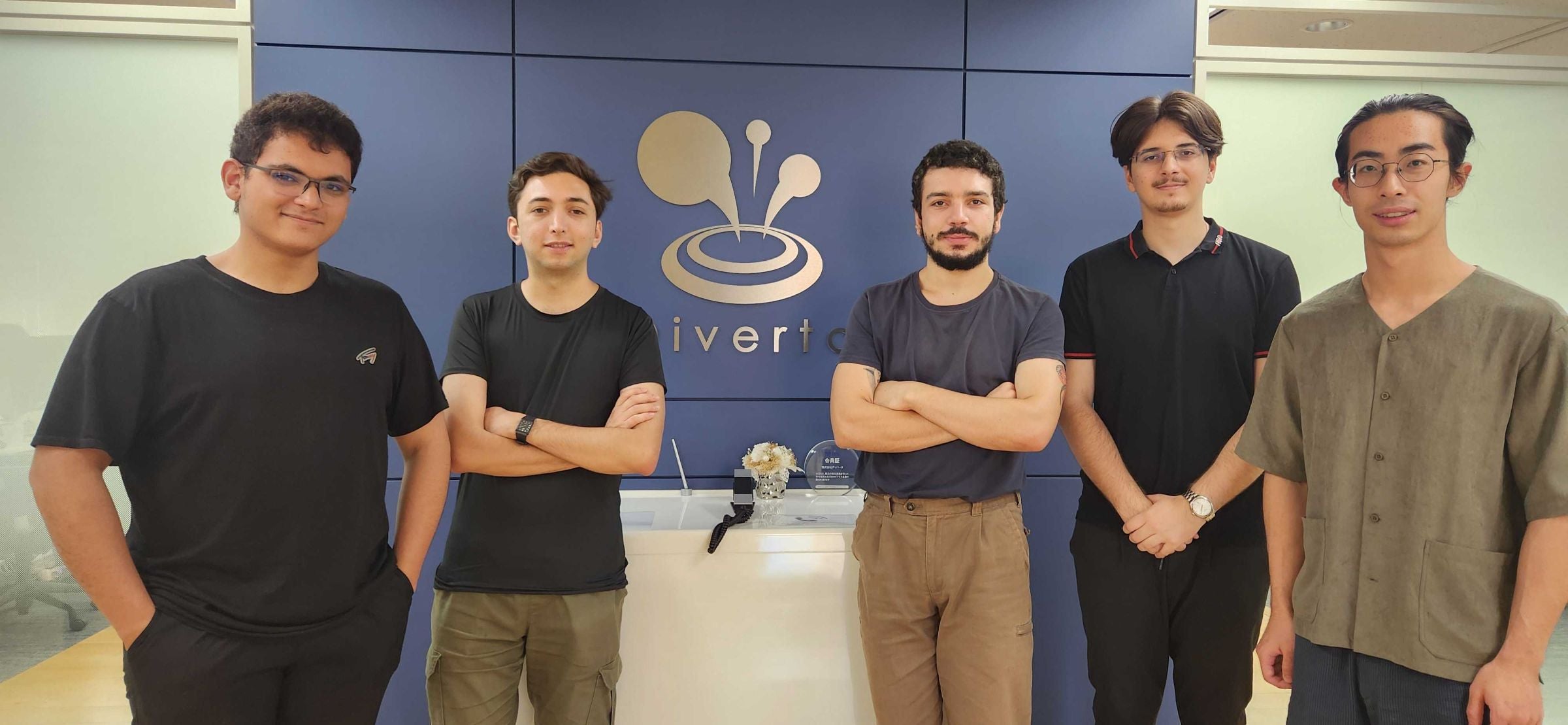
Asmaa: Thank you! Next, I want to talk about your experience before joining us. People often ask me, "How much experience do interns need to be selected at Diverta?" The truth is, we don't have one specific requirement. We value diverse backgrounds and take multiple aspects into consideration. So could you share more details about your experience and projects? This will give us a sense of where you were coming from.
Houcem: When it comes to previous experience, I didn't have any back-end experience at all. I had some front-end experience before this, with React, JavaScript, and different frameworks through my internships. This position is centered around full-stack work, but they valued my previous experience in coding and programming concepts like OOP.
Emin: Before joining the internship program, I had some web projects, which I think were the most relevant to the work we do here. As my friend just mentioned, the projects focus on full-stack development, so we were expected to write both back-end and front-end code. In the past, I had an internship in web development, and I also completed a couple of full-stack projects on my own, covering both back-end and front-end.
Asmaa: Now let's talk about work experience and culture. There are definitely stereotypes about working in Japan. Could you share both the positive and negative aspects you've experienced so far, whether it's about the company culture differences, work conditions, or the overall environment?
Wayne: Before this internship, I thought working in Japan would be very restraining. I have friends here who have to wear suits every day. But when I started, I found the atmosphere was actually really chill. We don't have to wear suits and can work with colleagues in a relaxed environment. I also expected to only do minor tasks, like modifying front-end UIs. But I got to do both front-end and back-end work and contribute to actual user-facing products. That's been a really good experience for me.
As for the negative aspects, while we have comprehensive user documentation, internal developers would benefit from more detailed technical docs for complex components like the query filter.
Rareș: I want to start with the interview process because there was a big difference from what I expected. In the Western world, you usually have to inflate your profile with as many skills as possible. But here, being sincere actually mattered more than exaggerating your experience. So I highly recommend being honest. Another thing that surprised me was the stereotype about Japanese companies, where you have to work overtime, come early, and wear suits. But as Wayne mentioned, that's definitely not the case here. The environment is very relaxed. You can talk to your supervisor like a friend and ask any questions, even if they seem simple. They'll treat every question as important. As for areas to improve, I agree with what was mentioned about documentation. For experienced developers it might not be an issue since they can navigate the codebase easily, but for beginners it can be challenging, especially with limited internal documentation.
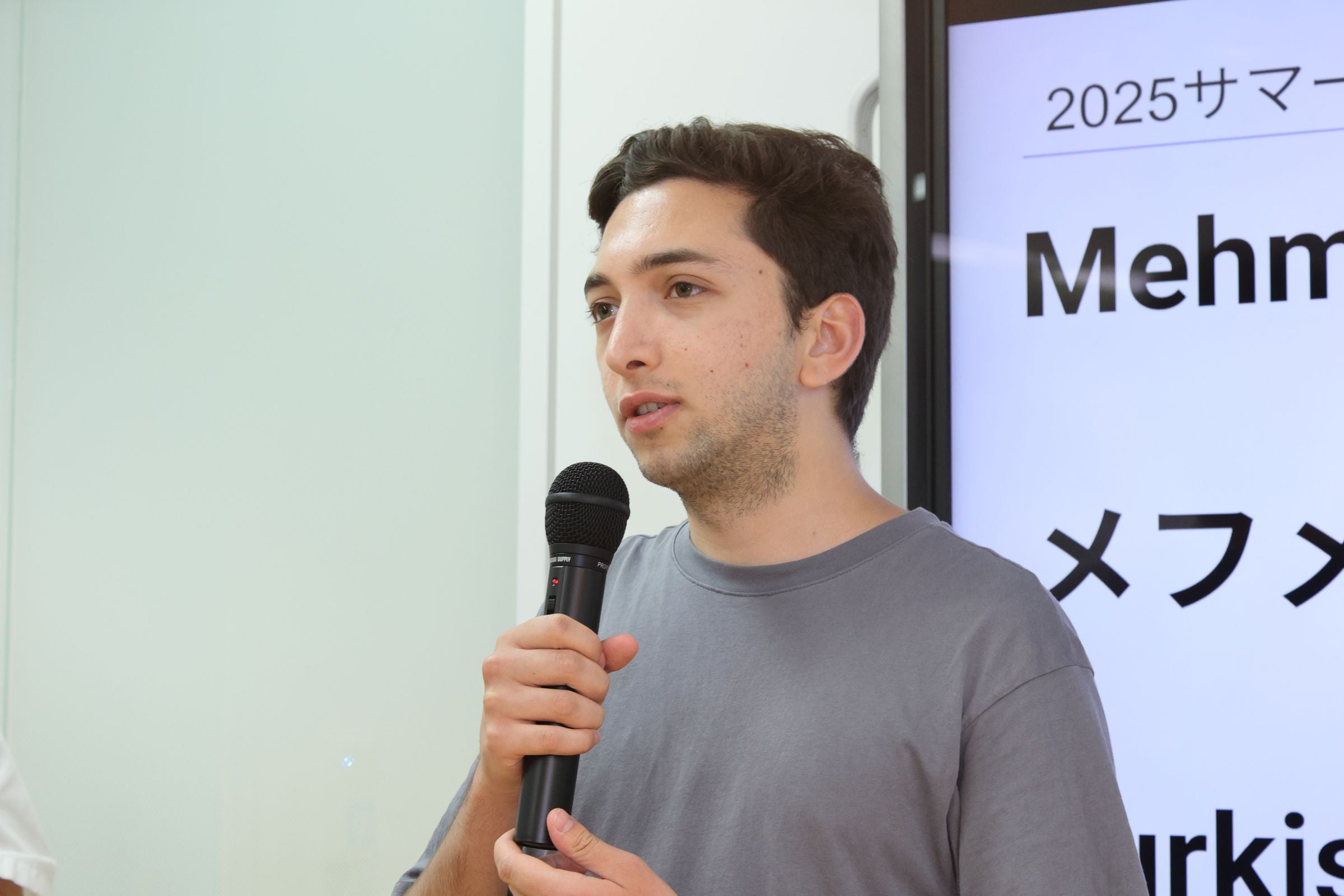
Asmaa: During the internship, what new tools or skills did you learn?
Hamza: We learned a lot of tools during this internship. It was definitely a good learning experience for someone like me who's a beginner in working in a production environment. First of all, the biggest thing I wanted to learn was Git and how to work in a collaborative environment. That's definitely one of the things I picked up. We also learned Vue 3 and Smarty templating language, which is kind of an older language but fun to work with. I also had the opportunity to learn PHP, which I initially thought was outdated, but after working with it, I discovered it has its strengths. It was fun to learn all these different tools and apply them in day-to-day work.
Emin: Like Hamza mentioned, I learned to work with PHP and Smarty templating language for the back-end. On the front-end, we get to work with both Vue 2 and Vue 3 since there's an ongoing migration between them. I also learned Docker for containerization and PostgreSQL for database management. Depending on the assigned tasks you work on, you might also pick up some TypeScript.
Asmaa: What are some of the challenges you’ve faced in this internship?
Wayne: I was assigned migration tasks and worked on them smoothly in the first two weeks. Then I moved to the query filter, which was challenging because there were many hidden bugs to solve one by one along the way. The real challenge came with the AI Azure generator, a brand new feature. It was originally assigned to Danilo, but I wanted something more challenging, so he passed it to me. I worked on it for three weeks, and during that time, it was really difficult. But I finally completed it after writing around 5,000 lines of code (laughs). I focused on making every component extensible and readable so that when I leave, anyone who wants to add new features will find it easy to build upon.
Rareș: Unlike the other members, my internship isn't over yet, so I'm currently working through my challenges (laughs). The feature I'm developing involves integrating AI to create custom plugins for users, so they wouldn't need to use the interface manually. The problem might seem complex, but with help from my mentor, we broke it down into three smaller, manageable problems. Each one is being solved step by step: creating an API for the file manager, developing the plugin system, and finally implementing everything into the AI solution. I’m still working on it but it's been a great learning experience on how to build APIs and improve existing ones.
Houcem: When I first started, I was assigned a relatively simple task, but I still struggled with it because I was just starting with back-end work and didn't know much. After a while, I got assigned a more complex task, which was integrating the condition builder into a new environment. It's a bit difficult to handle, especially in a Swagger UI environment. Even with a lot of help, it was very challenging. I lost count of how many commits I made just to fix the unit tests. So if you ever get stuck or frustrated, don't worry, you’re not gonna have it worse than me (laughs).
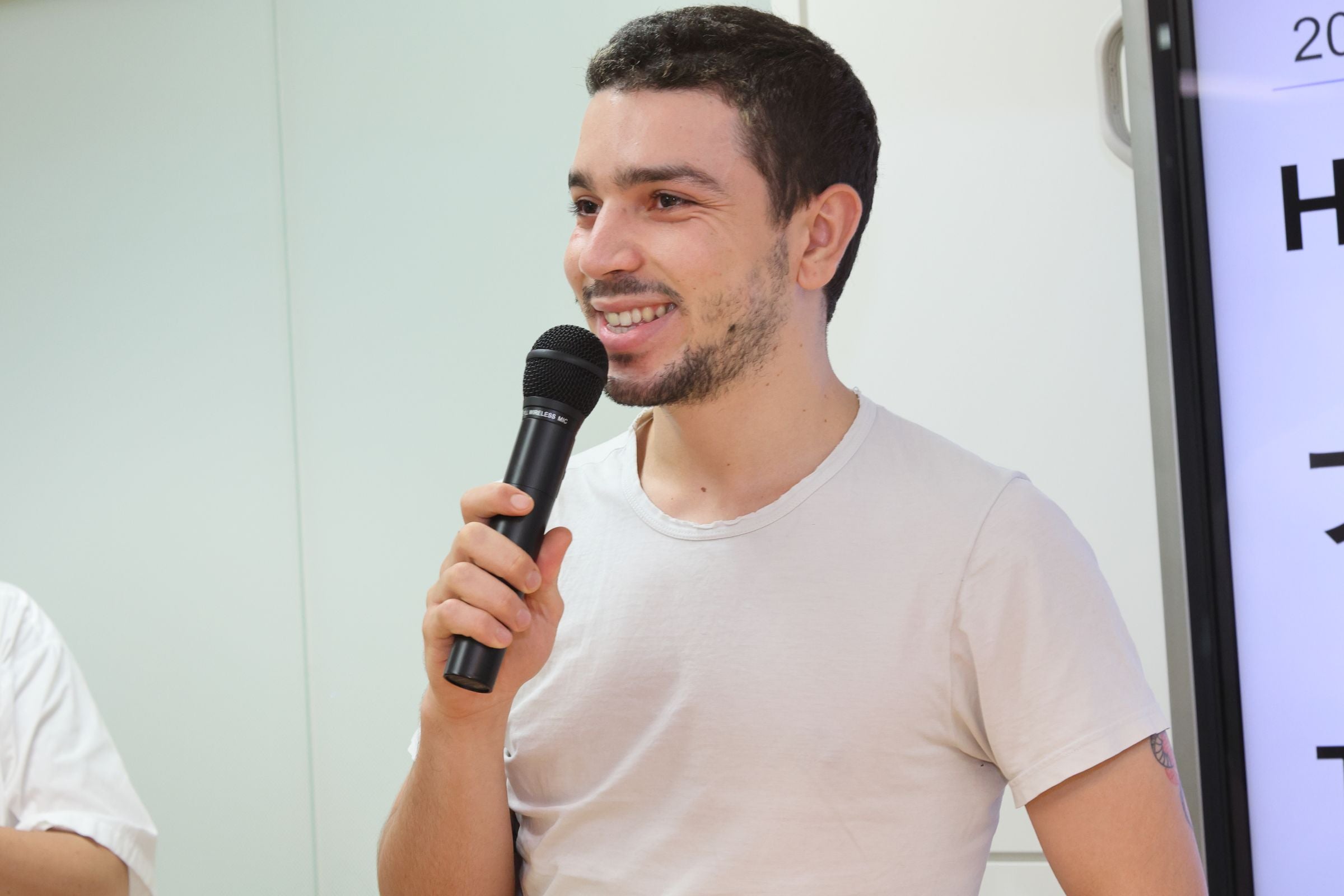
Asmaa: You've already worked on personal projects before, but working in a team environment is different. How has your coding style and approach evolved since starting the internship? What have you learned from code reviews and collaborating with others?
Hamza: When working on personal projects, I never paid much attention to commit history, pull requests, or code cleanliness. I only cared if it worked. But during my first PR here, I learned the hard way that quality matters. I had to start paying attention to details I'd previously ignored. Sometimes my PRs get rejected for over-complicating things with unnecessary abstractions when simpler, direct code would be better. It was definitely a valuable learning experience to work in a team and finally apply best practices that I'd learned but never actually used in personal projects.
Emin: One of the most important things working at Diverta teaches you is version control. Since pull requests can be accepted or rejected, you need to navigate through commit history, apply changes, or revert them. This really forces you to master Git. Once you learn proper version control in a production environment, it becomes valuable even for personal projects. You can make risky changes confidently knowing you can always roll back, and you'll naturally maintain a cleaner, more organized commit history.
Asmaa: Since this is a global internship, how has working with people from different cultures influenced you? What have you learned about communication, teamwork, and any challenges you've faced in this international environment?
Houcem: I should mention that this isn't my first international experience. I've worked in foreign companies before with international colleagues, so I fortunately had some exposure already. Nevertheless, it's still an extremely valuable learning experience because you get to learn about people from different backgrounds. You pick up small cultural things, like how Turkish pronounce “Baklava” (laughs) or understanding different communication styles. You may not remember every specific detail, but you collect plenty of stories and lessons that stay with you. If you're considering this internship, definitely think about the opportunity to meet people from different cultures, and this is a great place to do that.
Wayne: This is my first global internship. I had an internship in Beijing before, but that was different since I only worked with Chinese colleagues and there were no communication barriers. When I first came here, I sometimes struggled to understand what people were saying. I felt guilty and thought maybe I didn't belong or wasn't good enough. But after about two weeks, I could understand 99% of the conversations. To be frank, for many personal reasons, this has been a really meaningful and fortunate experience for me, feeling accepted by so many people from different backgrounds made me feel very welcome.
Rareș: This is not my first experience abroad. I studied in Germany for a semester, so I'd already had contact with different cultures. But coming to Japan and working here is definitely different in a good way because you learn even more about how cultures approach work differently. For instance, in Japan there's a strong emphasis on getting things done quickly while maintaining high quality, whereas in my country and other European countries, the focus is more on speed over quality. What surprised me most was how direct communication is, and how both Japanese and people working in Japan always try to help you as much as possible, even if the problem isn't directly related to their work. That was a big culture shock. In Europe, if someone didn't have time, they'd simply brush you off. But here, they genuinely make time to support you.
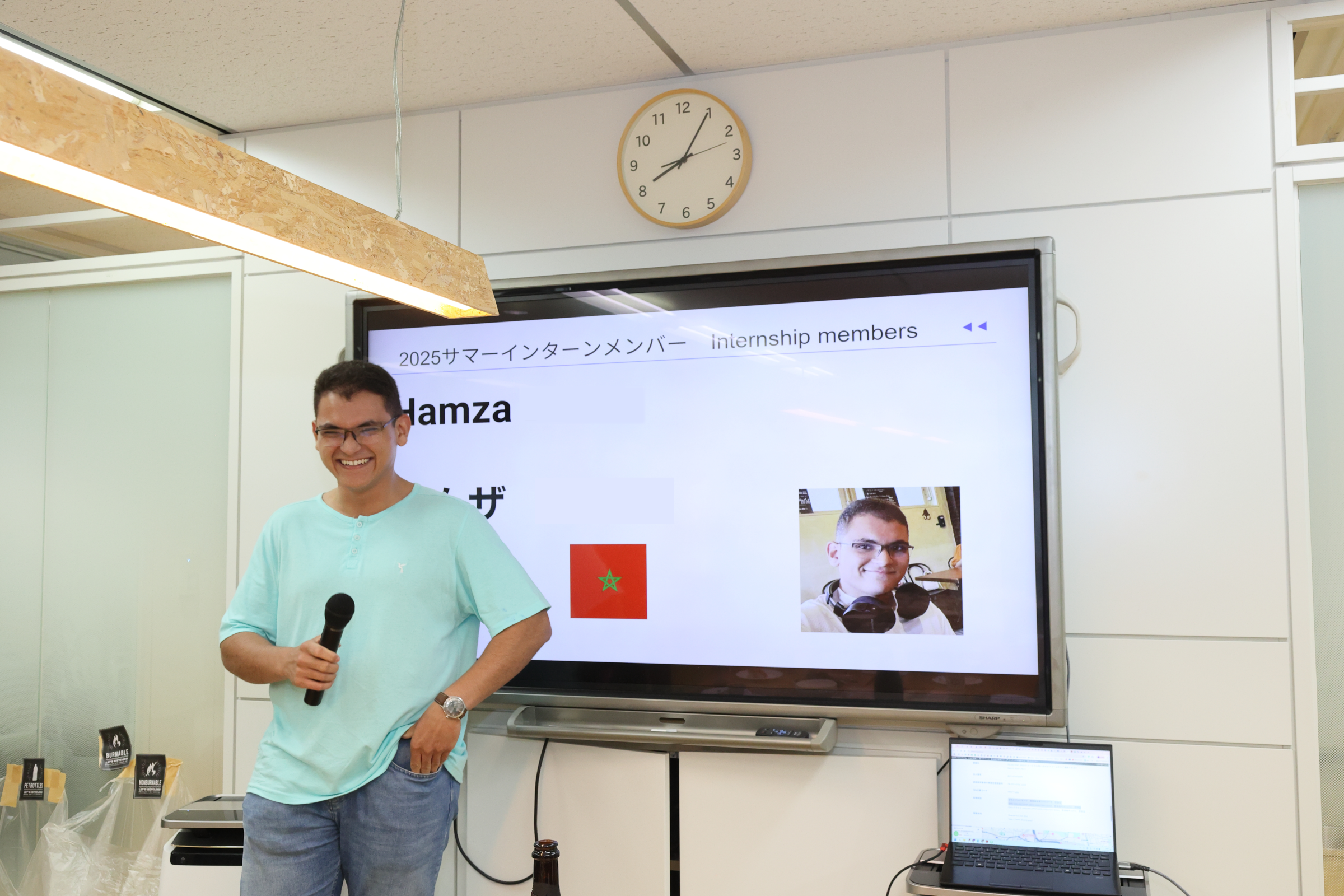
Asmaa: What advice would you give to someone considering applying for this internship?
Hamza: First, regarding the technical test with coding challenges, similar to HackerRank questions. I'd recommend getting comfortable with algorithmic problems and practicing competitive programming to pass it with flying colors.
Second, the interviews involve showcasing a project you've worked on. This is important because they're going to ask you detailed questions about it. You need to know your project inside and out, all its features and how everything works. If you used AI to help build it, that's fine, but you must fully understand what the code does. They'll know if you just copy-pasted without understanding, and that will hurt your chances. You don't need to memorize exact syntax, but you have to understand the logic and be able to explain your decisions. So my advice is to prepare a solid project and make sure you can confidently discuss every part of it.
Emin: My advice is to have a full-stack project ready since you'll need to demo one during the interview. You should understand every line of that project, even if you used AI to help build it. They will ask detailed questions like "Why did you do it this way?" or "Can you open this file and explain this part?" so you should be prepared to answer it confidently. If you just copy-pasted code without understanding it, they'll figure it out. Being able to use AI effectively is important, if it speeds you up, so learn to use it really well. Just don't abuse it to the point where you don't understand your own code anymore.
Houcem: My colleagues covered the main parts, so I'll add something practical after you get accepted. If you're from a country with flavorful cuisine like me, bring your own spices (laughs). There's a shortage here, and even when you find them, they're quite mild. Bring your favorites, share them with others, and have a great time.
.png)
Asmaa: There's one question I get asked surprisingly often in interviews. I'm not sure if it comes from interview prep guides, but I'd like to address it while we're all here. What does a typical day look like as an intern at Diverta?
Wayne: I usually wake up around 8:30 AM in the company-provided apartment. My commute takes about 15 minutes, which is pretty close. When I arrive at the office, I enjoy the free water and coffee, then start my workday.
Once at the office, I check Slack to see if my coordinator left any feedback on my previous work or GitHub commits. Then I post my start-of-day update in our Slack channel. I try to make myself a detailed plan of what I will work on that day then I start coding. If I run into any problems, I just walk over to my coordinator's desk and we have a quick discussion. Everything moves pretty quickly here.
Of course, we have free lunch provided (laughs), which is a great bonus for us. After lunch, we continue working. One important thing: we never work overtime. Everyone here really respects your time and makes the most of every minute during work hours. That's a typical day for me in Diverta. It's quite happy, chill, and smooth.
Rareș: I usually wake up around 9:40, depending on what I did the night before. A big thing here is that you can come whenever you want, which is huge. As long as you're at the office by noon, you're good. Then I take a short train ride to Iidabashi station. I have to take the Oedo line, which is quite deep underground, so I end up spending more time exiting the station than the actual train ride.
When I get to work, I scan my card, head inside, and start up my PC and coding environment. I check Slack and GitHub to see if I got new reviews on my pull requests or issues, and check if my reviewers left any feedback. We always post start-of-day and end-of-day updates, which is like a mini plan for what I want to accomplish today and what I actually did. After that, I start coding.
At 1 PM, we all go to lunch together, interns and employees. Afterwards, we get back to the office and continue coding. But a big part of my day is also communicating with colleagues. During a 7 or 8 hour workday, you face problems and end up talking a lot, which helps you get to know everyone. After work, I take the Oedo line back home, grab something to eat, and then call it a day.
On Fridays we have a weekly meeting where we present what we did that week. It's not that stressful, though my first one definitely was. The attendees just want to see your progress, any issues you faced, and especially if you have questions. Since many engineers are in the meeting, you get feedback from different perspectives. After the 15 minute online meeting, you just get back to work.
Hamza: The meetings can sometimes go up to 40 minutes (laughs). But overall, I'd say the atmosphere here is very chill. You can treat all the employees like friends and talk to them freely. The hierarchy isn't steep at all. You can approach anyone, ask them to explain things, and they'll definitely help you out with positive feedback. You don't have to worry about the stereotypical stressful Japanese work environment.
Emin: I agree. The company culture is really focused on producing quality work. For example, our weekly meetings are kept to around 20 minutes, so we don't waste time in unnecessary meetings. You also don't have to go through multiple managers to communicate with someone. You can just walk up to anyone and talk to them directly. People are very collaborative and care about the work you do, not superficial things like whether you're wearing a suit or if you arrived at exactly 8:30. I think the company has the right priorities, and the culture is very respectful.
Asmaa: Lastly, share with me one favorite thing about this experience, outside the office!
Houcem: Besides the work, since this is my first time in Japan, I get the opportunity to sightsee on weekends. I think that's one of the biggest advantages, going to different cities, exploring the country, and getting to know the culture. I've never been to Asia or another developed country before, so this was very eye-opening for me.
Wayne: For me, my favorite part is getting to know people from so many different countries. Previously, I only knew Chinese people and Singaporeans. I'd never met so many foreigners (laughs). It's really enjoyable to have foreign friends and exchange our minds and cultures. I think that's my favorite part. Japan is great, food is good, but honestly, my favorite part is my colleagues and friends here.
Rareș: My favorite part, besides the coding, is definitely trying new food. Since I'd never been to Asia before, there are so many authentic Asian restaurants in Japan, not just Western interpretations. Getting to try traditional Japanese, Thai, and Korean food for the first time has been one of the biggest highlights of my internship.
Hamza: For me it’s meeting the people from around the world, not the food at all (laughs).
Emin: Outside of work, I recommend using the Meetup app to find events around the city. There's a huge variety since Tokyo has such a high population. You'll have opportunities to go to meetups and meet people you might not be able to elsewhere. The social environment here is really great.